Blog Details
Choosing the Right Entity for Your Startup
Corporate Law • June 5 2026

Introduction
The seconds after a collision feel slow and loud at the same time. Your body is flooded with adrenaline, your mind racing through a hundred fragments — Is everyone okay? Whose fault was that? What do I even do right now?
Those first few minutes are disorienting, but they’re also critical. The choices you make at the scene — and in the 48 hours that follow — directly shape your health, your insurance claim, and any potential legal case. This guide walks you through exactly what to do, step by step, so you can protect both your physical recovery and your financial future.
Introduction
The seconds after a collision feel slow and loud at the same time. Your body is flooded with adrenaline, your mind racing through a hundred fragments — Is everyone okay? Whose fault was that? What do I even do right now?
Those first few minutes are disorienting, but they’re also critical. The choices you make at the scene — and in the 48 hours that follow — directly shape your health, your insurance claim, and any potential legal case. This guide walks you through exactly what to do, step by step, so you can protect both your physical recovery and your financial future.
Introduction
The seconds after a collision feel slow and loud at the same time. Your body is flooded with adrenaline, your mind racing through a hundred fragments — Is everyone okay? Whose fault was that? What do I even do right now?
Those first few minutes are disorienting, but they’re also critical. The choices you make at the scene — and in the 48 hours that follow — directly shape your health, your insurance claim, and any potential legal case. This guide walks you through exactly what to do, step by step, so you can protect both your physical recovery and your financial future.
Check for Injuries
Check for Injuries and Get to Safety
Before anything else, check yourself and your passengers for injuries. If anyone is seriously hurt, do not move them unless there’s an immediate danger (like a fire or leaking fuel). Call 911 right away and let emergency responders take over.
If the crash is minor and your car is drivable, move it to the shoulder or a safe spot out of traffic. Turn on your hazard lights. A minor fender-bender isn’t worth standing in a live lane.
What to say to the 911 operator: Keep it simple. “There’s been a collision at [intersection or mile marker]. [Number] vehicles involved. [Yes/No] injuries.” Let them guide the rest.
Check for Injuries
Check for Injuries and Get to Safety
Before anything else, check yourself and your passengers for injuries. If anyone is seriously hurt, do not move them unless there’s an immediate danger (like a fire or leaking fuel). Call 911 right away and let emergency responders take over.
If the crash is minor and your car is drivable, move it to the shoulder or a safe spot out of traffic. Turn on your hazard lights. A minor fender-bender isn’t worth standing in a live lane.
What to say to the 911 operator: Keep it simple. “There’s been a collision at [intersection or mile marker]. [Number] vehicles involved. [Yes/No] injuries.” Let them guide the rest.
Check for Injuries
Check for Injuries and Get to Safety
Before anything else, check yourself and your passengers for injuries. If anyone is seriously hurt, do not move them unless there’s an immediate danger (like a fire or leaking fuel). Call 911 right away and let emergency responders take over.
If the crash is minor and your car is drivable, move it to the shoulder or a safe spot out of traffic. Turn on your hazard lights. A minor fender-bender isn’t worth standing in a live lane.
What to say to the 911 operator: Keep it simple. “There’s been a collision at [intersection or mile marker]. [Number] vehicles involved. [Yes/No] injuries.” Let them guide the rest.
Call the Police — Every Time
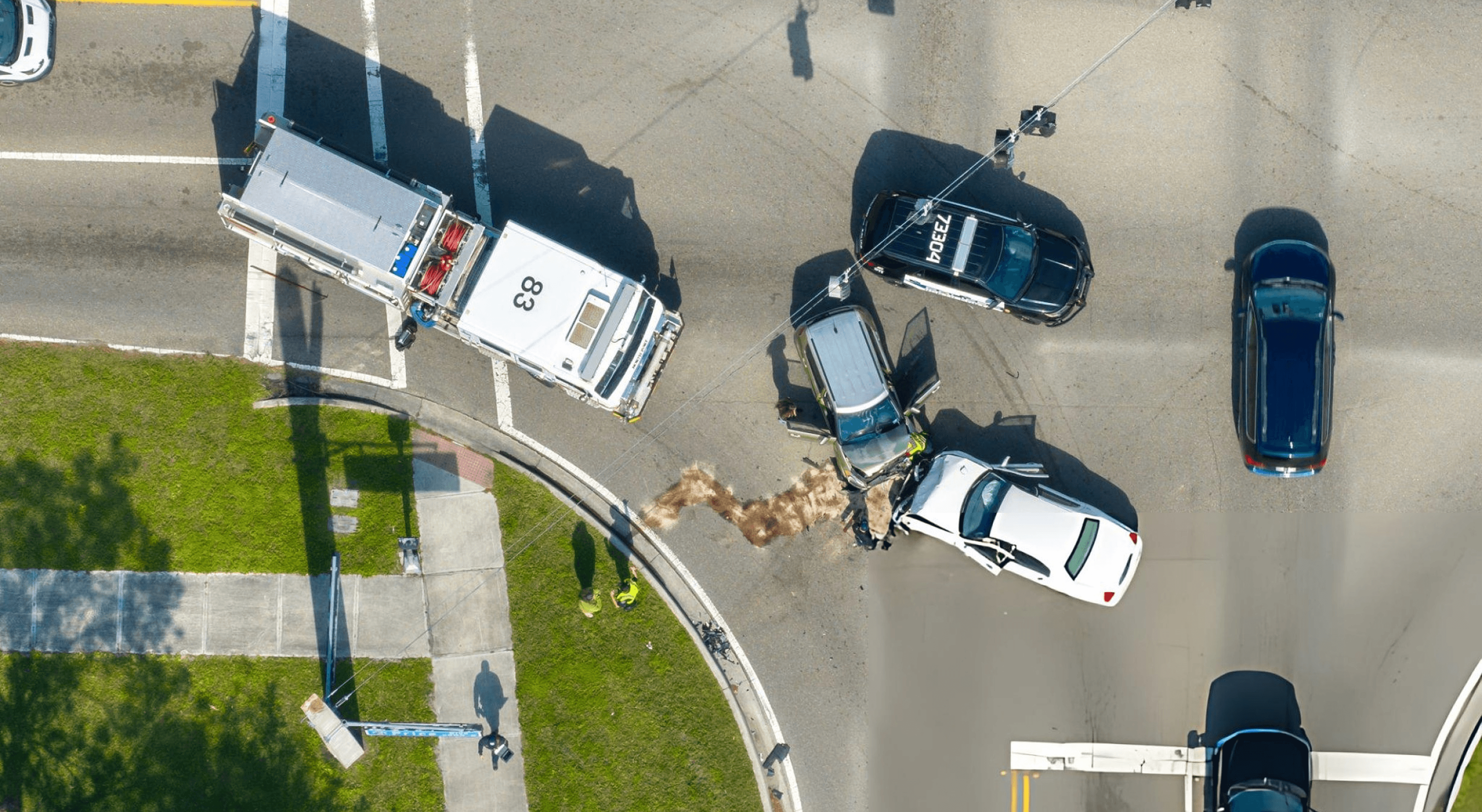
Even if the damage looks minor, call the police and request an officer come to the scene. In many states, it’s legally required if there are injuries or property damage above a certain dollar amount. But even where it’s not required, a police report is the single most important piece of neutral documentation you’ll have.
When the officer arrives, give a clear, factual account of what happened. Do not guess, speculate, or accept blame — even casually. “I’m not sure” is a perfectly honest answer when you’re still processing what happened.
When the officer arrives, give a clear, factual account of what happened. Do not guess, speculate, or accept blame — even casually. “I’m not sure” is a perfectly honest answer when you’re still processing what happened.
Call the Police — Every Time
Even if the damage looks minor, call the police and request an officer come to the scene. In many states, it’s legally required if there are injuries or property damage above a certain dollar amount. But even where it’s not required, a police report is the single most important piece of neutral documentation you’ll have.
When the officer arrives, give a clear, factual account of what happened. Do not guess, speculate, or accept blame — even casually. “I’m not sure” is a perfectly honest answer when you’re still processing what happened.
When the officer arrives, give a clear, factual account of what happened. Do not guess, speculate, or accept blame — even casually. “I’m not sure” is a perfectly honest answer when you’re still processing what happened.
Call the Police — Every Time
Even if the damage looks minor, call the police and request an officer come to the scene. In many states, it’s legally required if there are injuries or property damage above a certain dollar amount. But even where it’s not required, a police report is the single most important piece of neutral documentation you’ll have.
When the officer arrives, give a clear, factual account of what happened. Do not guess, speculate, or accept blame — even casually. “I’m not sure” is a perfectly honest answer when you’re still processing what happened.
When the officer arrives, give a clear, factual account of what happened. Do not guess, speculate, or accept blame — even casually. “I’m not sure” is a perfectly honest answer when you’re still processing what happened.
Document Everything You Can
Document Everything You Can
Your future claim lives or dies by the evidence you gather now. If you’re physically able, use your phone to capture:
Photos of all vehicles involved, from multiple angles, including license plates.
Wide shots of the accident scene — road conditions, traffic signs, skid marks, weather.
Close-ups of any visible injuries (bruises, cuts, swelling).
Photos of the other driver’s insurance card and ID.
Also jot down:
Date, time, and exact location.
The other driver’s name, phone number, and insurance company + policy number.
Names and contact info for any witnesses.
The responding officer’s name, badge number, and the incident report number.
If you’re too injured to do this, ask a passenger or a bystander to help. If no one is available, don’t panic — your attorney can gather much of this later. But if you can, do it now.
Document Everything You Can
Document Everything You Can
Your future claim lives or dies by the evidence you gather now. If you’re physically able, use your phone to capture:
Photos of all vehicles involved, from multiple angles, including license plates.
Wide shots of the accident scene — road conditions, traffic signs, skid marks, weather.
Close-ups of any visible injuries (bruises, cuts, swelling).
Photos of the other driver’s insurance card and ID.
Also jot down:
Date, time, and exact location.
The other driver’s name, phone number, and insurance company + policy number.
Names and contact info for any witnesses.
The responding officer’s name, badge number, and the incident report number.
If you’re too injured to do this, ask a passenger or a bystander to help. If no one is available, don’t panic — your attorney can gather much of this later. But if you can, do it now.
Document Everything You Can
Document Everything You Can
Your future claim lives or dies by the evidence you gather now. If you’re physically able, use your phone to capture:
Photos of all vehicles involved, from multiple angles, including license plates.
Wide shots of the accident scene — road conditions, traffic signs, skid marks, weather.
Close-ups of any visible injuries (bruises, cuts, swelling).
Photos of the other driver’s insurance card and ID.
Also jot down:
Date, time, and exact location.
The other driver’s name, phone number, and insurance company + policy number.
Names and contact info for any witnesses.
The responding officer’s name, badge number, and the incident report number.
If you’re too injured to do this, ask a passenger or a bystander to help. If no one is available, don’t panic — your attorney can gather much of this later. But if you can, do it now.
Seek Medical Attention
Seek Medical Attention — Quickly
Not all injuries show up in the first hour. Adrenaline masks pain. Whiplash, internal bleeding, soft‑tissue damage, and even traumatic brain injuries can take hours or days to surface.
Go to a doctor, an urgent care center, or the ER — even if you feel “fine.” Tell them you were in a car accident. Let them run the scans and document every symptom.
This isn’t just about your health (though that’s the priority). It’s also about evidence. The insurance company will scrutinize the gap between the crash and your first medical visit. A delay of even a few days can be used to argue that your injuries weren’t serious — or weren’t caused by the accident at all.
Seek Medical Attention
Seek Medical Attention — Quickly
Not all injuries show up in the first hour. Adrenaline masks pain. Whiplash, internal bleeding, soft‑tissue damage, and even traumatic brain injuries can take hours or days to surface.
Go to a doctor, an urgent care center, or the ER — even if you feel “fine.” Tell them you were in a car accident. Let them run the scans and document every symptom.
This isn’t just about your health (though that’s the priority). It’s also about evidence. The insurance company will scrutinize the gap between the crash and your first medical visit. A delay of even a few days can be used to argue that your injuries weren’t serious — or weren’t caused by the accident at all.
Seek Medical Attention
Seek Medical Attention — Quickly
Not all injuries show up in the first hour. Adrenaline masks pain. Whiplash, internal bleeding, soft‑tissue damage, and even traumatic brain injuries can take hours or days to surface.
Go to a doctor, an urgent care center, or the ER — even if you feel “fine.” Tell them you were in a car accident. Let them run the scans and document every symptom.
This isn’t just about your health (though that’s the priority). It’s also about evidence. The insurance company will scrutinize the gap between the crash and your first medical visit. A delay of even a few days can be used to argue that your injuries weren’t serious — or weren’t caused by the accident at all.
Notify Insurance Company
Most policies require you to report an accident “promptly.” Call your insurer and tell them the basics: where, when, and who was involved. Stick to objective facts. Do not give a recorded statement without speaking to an attorney first.
The adjuster may sound sympathetic, but their job is to minimize the company’s payout. A single poorly phrased sentence — “I’ve been so tired lately, maybe I wasn’t paying attention” — can be twisted to reduce or deny your claim.
You can say: “I’m reporting an accident. I’m still seeking medical care and will provide more details once I understand the full extent of my injuries.”
Notify Insurance Company
Most policies require you to report an accident “promptly.” Call your insurer and tell them the basics: where, when, and who was involved. Stick to objective facts. Do not give a recorded statement without speaking to an attorney first.
The adjuster may sound sympathetic, but their job is to minimize the company’s payout. A single poorly phrased sentence — “I’ve been so tired lately, maybe I wasn’t paying attention” — can be twisted to reduce or deny your claim.
You can say: “I’m reporting an accident. I’m still seeking medical care and will provide more details once I understand the full extent of my injuries.”
Notify Insurance Company
Most policies require you to report an accident “promptly.” Call your insurer and tell them the basics: where, when, and who was involved. Stick to objective facts. Do not give a recorded statement without speaking to an attorney first.
The adjuster may sound sympathetic, but their job is to minimize the company’s payout. A single poorly phrased sentence — “I’ve been so tired lately, maybe I wasn’t paying attention” — can be twisted to reduce or deny your claim.
You can say: “I’m reporting an accident. I’m still seeking medical care and will provide more details once I understand the full extent of my injuries.”
Don’t Discuss the Accident
This is one of the most overlooked mistakes people make. Posting a photo of your damaged car with the caption “Thank God I’m okay!” may seem harmless, but it’s discoverable. The insurance company’s legal team can — and will — use your posts to argue that your injuries aren’t as severe as claimed.
Even seemingly innocent check-ins, gym visits, or photos of you out with friends can be taken out of context. Stay off social media entirely until your case is resolved, or at least until you’ve spoken with your attorney about what’s safe.
Don’t Discuss the Accident
This is one of the most overlooked mistakes people make. Posting a photo of your damaged car with the caption “Thank God I’m okay!” may seem harmless, but it’s discoverable. The insurance company’s legal team can — and will — use your posts to argue that your injuries aren’t as severe as claimed.
Even seemingly innocent check-ins, gym visits, or photos of you out with friends can be taken out of context. Stay off social media entirely until your case is resolved, or at least until you’ve spoken with your attorney about what’s safe.
Don’t Discuss the Accident
This is one of the most overlooked mistakes people make. Posting a photo of your damaged car with the caption “Thank God I’m okay!” may seem harmless, but it’s discoverable. The insurance company’s legal team can — and will — use your posts to argue that your injuries aren’t as severe as claimed.
Even seemingly innocent check-ins, gym visits, or photos of you out with friends can be taken out of context. Stay off social media entirely until your case is resolved, or at least until you’ve spoken with your attorney about what’s safe.
Speak to an Attorney
Speak to an Attorney Before You Settle
The first settlement offer from an insurance company is rarely the one you deserve. They’re counting on you needing the money quickly — medical bills are piling up, you’re missing work — and they’ll make an offer that feels like a lifeline but is actually a fraction of your case’s true value.
A personal injury attorney can:
Calculate the full scope of your damages — current and future medical costs, lost income, reduced earning capacity, pain and suffering.
Handle all communication with insurers so you don’t accidentally damage your own claim.
Investigate the crash independently — subpoenaing traffic camera footage, cell phone records, vehicle black box data.
Take the case to trial if the settlement offer isn’t fair.
Most personal injury firms (including LexEdge) work on a contingency fee basis: you pay nothing unless they recover compensation for you. The consultation is free. There’s zero financial risk in understanding your rights.
Speak to an Attorney
Speak to an Attorney Before You Settle
The first settlement offer from an insurance company is rarely the one you deserve. They’re counting on you needing the money quickly — medical bills are piling up, you’re missing work — and they’ll make an offer that feels like a lifeline but is actually a fraction of your case’s true value.
A personal injury attorney can:
Calculate the full scope of your damages — current and future medical costs, lost income, reduced earning capacity, pain and suffering.
Handle all communication with insurers so you don’t accidentally damage your own claim.
Investigate the crash independently — subpoenaing traffic camera footage, cell phone records, vehicle black box data.
Take the case to trial if the settlement offer isn’t fair.
Most personal injury firms (including LexEdge) work on a contingency fee basis: you pay nothing unless they recover compensation for you. The consultation is free. There’s zero financial risk in understanding your rights.
Speak to an Attorney
Speak to an Attorney Before You Settle
The first settlement offer from an insurance company is rarely the one you deserve. They’re counting on you needing the money quickly — medical bills are piling up, you’re missing work — and they’ll make an offer that feels like a lifeline but is actually a fraction of your case’s true value.
A personal injury attorney can:
Calculate the full scope of your damages — current and future medical costs, lost income, reduced earning capacity, pain and suffering.
Handle all communication with insurers so you don’t accidentally damage your own claim.
Investigate the crash independently — subpoenaing traffic camera footage, cell phone records, vehicle black box data.
Take the case to trial if the settlement offer isn’t fair.
Most personal injury firms (including LexEdge) work on a contingency fee basis: you pay nothing unless they recover compensation for you. The consultation is free. There’s zero financial risk in understanding your rights.
A Quick Summary
What Not to Do — A Quick Summary
Don’t admit fault or apologize.
Don’t admit fault or apologize.
Don’t skip medical treatment.
Don’t skip medical treatment.
Don’t accept a settlement offer without legal advice.
Don’t accept a settlement offer without legal advice.
A Quick Summary
What Not to Do — A Quick Summary
Don’t admit fault or apologize.
Don’t admit fault or apologize.
Don’t skip medical treatment.
Don’t skip medical treatment.
Don’t accept a settlement offer without legal advice.
Don’t accept a settlement offer without legal advice.
A Quick Summary
What Not to Do — A Quick Summary
Don’t admit fault or apologize.
Don’t admit fault or apologize.
Don’t skip medical treatment.
Don’t skip medical treatment.
Don’t accept a settlement offer without legal advice.
Don’t accept a settlement offer without legal advice.
When to Call LexEdge
When to Call LexEdge
You don’t have to figure this out alone. If you’ve been in a car accident — even a minor one — a free 15‑minute consultation with one of our personal injury attorneys can tell you exactly where you stand and what your claim may be worth. There’s no obligation, no pressure, and no cost.
Available 24/7 | Free Case Review | No Fee Unless We Win
When to Call LexEdge
When to Call LexEdge
You don’t have to figure this out alone. If you’ve been in a car accident — even a minor one — a free 15‑minute consultation with one of our personal injury attorneys can tell you exactly where you stand and what your claim may be worth. There’s no obligation, no pressure, and no cost.
Available 24/7 | Free Case Review | No Fee Unless We Win
When to Call LexEdge
When to Call LexEdge
You don’t have to figure this out alone. If you’ve been in a car accident — even a minor one — a free 15‑minute consultation with one of our personal injury attorneys can tell you exactly where you stand and what your claim may be worth. There’s no obligation, no pressure, and no cost.
Available 24/7 | Free Case Review | No Fee Unless We Win
Others Insights
Others Insights
More legal insights, straight from our practice — Articles.
More legal insights, straight from our practice — Articles.
More legal insights, straight from our practice — Articles.

Contact
Every strong case starts with a real conversation — Contact.

Stay informed on the law that
Affects You.
MORE
13th Street
47 W 13th St, New York


Designed by Artificed Design Agency LLC


Contact
Every strong case starts with a real conversation — Contact.
Stay informed on the law that
Affects You.
MORE
13th Street
47 W 13th St, New York
Designed by Artificed Design Agency LLC
Contact
Every strong case starts with a real conversation — Contact.
Behind every victory is a team you can trust
Affects You.
MORE
13th Street
47 W 13th St, New York
Designed by Artificed Design Agency LLC
